Last updated: November 21, 2026.
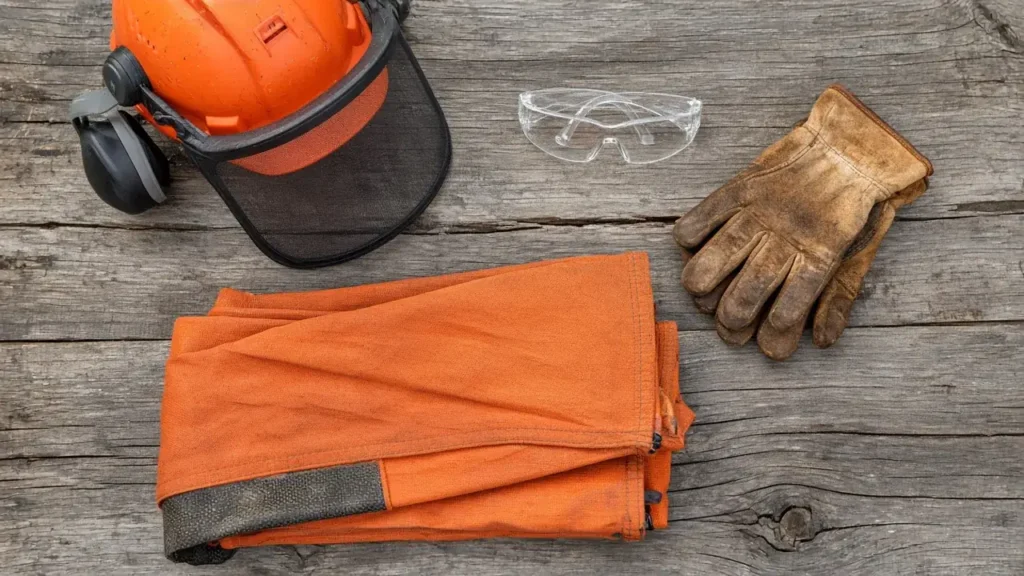
If you are going to run any kind of saw in the yard, the tool is only half of the purchase. The other half is the boring stuff that keeps a small mistake from becoming a hospital visit: eye protection, a helmet when wood can fall, hearing protection on louder saws, gloves, boots, and chaps if a chain will be anywhere near your legs.
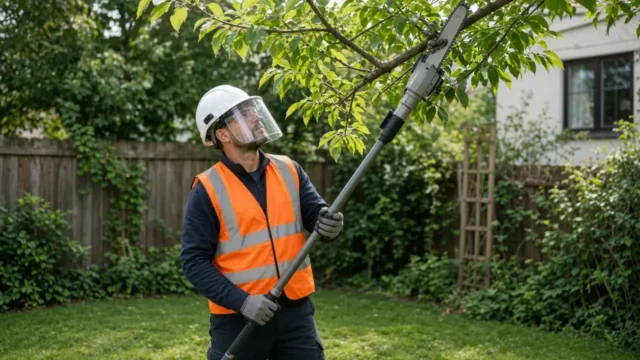
You do not need a logger’s full kit to clip three water sprouts with loppers. You do need more than a baseball cap and sunglasses the moment a chain is moving under a tree. This is the homeowner setup that makes sense, and a few specific product types to shop for. For how to actually make the cuts, read pole saw safety first — gear is not a substitute for staying on the ground and staying out of the fall line.
Quick picks:
- Minimum every time a chain is running: wraparound safety glasses or a face screen, plus closed-toe boots.
- When anything can fall from above (pole saw, storm cleanup): a forestry or climbing-style helmet with a face screen and muffs, or a hard hat plus glasses and muffs.
- When a handheld chainsaw is involved, including a mini saw used low: chainsaw chaps that meet a current standard (look for a recognized label such as ASTM F1897 or the equivalent current marking on the product you buy — confirm on the package).
- Always: gloves you can still feel the saw with, and no loose hoodie strings.
Comparison table
| Gear | Typical price range (Nov 2026, shop around) | When you need it | What to look for |
|---|---|---|---|
| Safety glasses or goggles | $8–$25 | Every saw cut, every chipping job | ANSI Z87.1 (or current equivalent) marking, wraparound, not your everyday sunglasses |
| Helmet with screen and muffs | $50–$150 | Pole-saw work, any cut where wood can fall or bounce | Forestry helmet kit: hard shell, mesh or polycarbonate visor, ear muffs. A bicycle helmet is not this |
| Hearing protection | $15–$40 if bought alone | Gas saws; loud electrics at length | Muffs or a rated plug; many helmet kits already include muffs |
| Chainsaw chaps | $60–$150 | Handheld saws; strongly consider if you also drop a pole-saw head to knee height | Labeled chainsaw chaps, right length, wraps that actually stay closed |
| Work gloves | $10–$30 | Almost always | Fit, some cut resistance is nice, but you must still be able to run the controls |
| Boots | You may already own them | Always | Closed toe, decent tread, no sandals, no smooth worn sneakers on wet roots |
Eyes first (do not skip this one)
Chips, grit, and a piece of bark at face height are more common than a movie-style accident. Regular prescription glasses are not enough unless they are rated and worn with side protection. Buy a simple pair of Z87.1-marked wraparound glasses, or a visor on a helmet, or both. If you wear prescription lenses, look for rated over-glasses or a clear visor.
Helmet, visor, and muffs
A pole saw throws wood from above you. A baseball cap does nothing for that. A forestry helmet kit looks like overkill in a suburban driveway until the first piece ticks off the shell. You want a hard hat or forestry helmet, a mesh or clear visor, and muffs if the saw is loud.
You do not need the most expensive climbing helmet on the market for occasional backyard work, but you do need one that is actually made for impact from above and that you will wear. If it sits in the box because it is miserable, you bought the wrong one.
Chaps
Chaps will not make you invincible. They are designed to jam a chain and buy you a chance. They matter most with a handheld chainsaw, including a mini saw, because that is when the bar is near your thigh and your knee. With a pole saw, the bar is usually out in front of you — until you start a low cut, lose your footing, or bring the head down to buck a piece on the ground.
If you own a handheld saw, buy chaps. Look for a current chainsaw-protective standard on the label (ASTM F1897 is the common U.S. marking you will still see; check that the pair you buy is listed to a current edition). Get the length right. Cinch them. They are hot in July. Wear them anyway.
Gloves, boots, and clothes
Gloves should fit. A bulky winter glove that makes you fumble the lock is not safer. Leather or a light work glove with some grip is enough for most homeowners.
Boots should be closed-toe and stable. That is a low bar and people still fail it.
Clothes should be close enough at the cuff that they will not feed into a chain, and not so tight you cannot move. No dangling drawstrings. Do not wear jewelry you would mind leaving in a log.
A homeowner kit you can buy in one order
If you are just starting and you already bought a pole saw or a mini chainsaw, shop in this order:
- Glasses (today, before the first cut).
- Helmet kit if any work is overhead.
- Chaps if any work is handheld.
- Gloves if you do not already have a decent pair.
That bundle will often cost less than a mid-range saw and will matter more than a second battery. If the job still looks like it belongs in the hire column, the gear is not a green light. It is what you wear on the jobs that truly are yours.
What this article is not
It is not a lab certification of a particular 2026 SKU. Specific Amazon models come and go; buy the standard and the fit, then stick to a reputable maker if you can (the usual forestry and workwear names). Re-check the safety-standard wording on the product page when you refresh this post.
FAQ
Do I need chaps for a pole saw? They are less critical than for a handheld saw, and they are still a good idea if you also cut low or buck on the ground with the same head. Glasses and a helmet are the first two buys for overhead work.
Can I use a bike helmet? No. It is not designed for the same impacts or for a visor and muffs.
Is this enough to climb a tree? No. Climbing is a different skill and a different set of gear, and it is not a homeowner weekend project on a large tree. Stay on the ground or hire the work.